Owning an investment property can be rewarding, but managing one well takes time, organisation and a good understanding of the rental process.
That is where a property manager comes in.
A property manager does much more than collect rent. Their role is to help landlords manage the day-to-day responsibilities of a tenancy, protect the condition of the property, communicate with tenants and keep the investment running as smoothly as possible.
For landlords across the Moreton Bay Region and Brisbane’s northside, having a professional property manager can make owning a rental property far less hands-on.
So, what does a property manager actually do for a landlord?
1. Helps Set the Right Rental Price
Before a property is advertised, one of the first jobs of a property manager is helping determine an appropriate rental price.
This usually involves looking at:
- Comparable rental properties
- Current local demand
- Property condition
- Location
- Features and inclusions
- Competing listings
Setting the rent correctly is important.
If a property is priced too high, it may sit vacant longer. If it is priced too low, the landlord may miss out on potential rental income.
A property manager with strong local knowledge can help find the right balance between attracting suitable tenants and achieving a competitive return.
2. Markets the Property
Good rental marketing plays an important role in attracting tenant interest.
A property manager may coordinate:
- Property photography
- Online advertising
- Listing descriptions
- Enquiry management
- Open homes or inspections
- Applicant follow-up
The aim is not simply to put the property online.
It is to present the home clearly and professionally so it stands out to suitable tenants.
For landlords in the Moreton Bay Region, local market knowledge can also help shape how a property is positioned and advertised.
3. Manages Tenant Enquiries and Applications
Once the property is advertised, a property manager becomes the main point of contact for prospective tenants.
They manage enquiries, organise inspections and process applications.
A professional property manager should carefully assess the information provided by applicants, including:
- Rental history
- References
- Affordability
- Application details
- Previous tenancy information where available
This helps the landlord make a more informed decision about who will live in the property.
4. Coordinates the Start of the Tenancy
There is a lot involved in starting a new tenancy.
A property manager can help coordinate the required documentation and make sure the process is handled properly from the beginning.
This may include:
- Preparing tenancy documentation
- Organising the lease
- Coordinating the entry condition report
- Collecting required payments
- Providing tenancy information
- Arranging key handover
Starting the tenancy correctly helps create clarity for both the landlord and tenant.
5. Collects and Monitors Rent
Rent collection is one of the most obvious parts of property management, but there is more to it than simply receiving payments.
A property manager monitors rental payments and keeps track of whether rent is being paid as required.
If arrears occur, they can follow up promptly and manage communication with the tenant.
Early action is important because small payment issues can become more difficult if they are left unaddressed.
6. Carries Out Routine Inspections
Routine inspections help landlords stay informed about the general condition of their investment property.
A property manager may inspect the property at appropriate intervals and provide the landlord with an update about:
- General condition
- Cleanliness
- Maintenance concerns
- Visible damage
- Areas requiring follow-up
Routine inspections are also an opportunity to identify small maintenance issues before they become larger and more expensive problems.
For many landlords, these inspection reports provide valuable peace of mind.
7. Coordinates Maintenance and Repairs
Maintenance is a major part of property management.
Tenants need a clear way to report issues, and landlords need someone who can assess the situation, communicate clearly and arrange repairs where required.
A property manager may help coordinate:
- General repairs
- Plumbing issues
- Electrical work
- Appliance problems
- Air conditioning
- Smoke alarm servicing
- Gardening or external maintenance
- Urgent repairs
They can also help obtain quotes, communicate with tradespeople and keep the landlord informed.
Prompt maintenance helps protect the condition of the property and supports a better tenant experience.
8. Manages Communication With Tenants
Landlords who self-manage often discover that tenant communication can take up a significant amount of time.
A property manager becomes the main contact for many day-to-day tenancy matters.
This can include:
- Maintenance requests
- Lease questions
- Access arrangements
- Inspections
- Rental payments
- General tenancy enquiries
Having one professional point of contact can make communication clearer for both the tenant and the landlord.
9. Handles Lease Renewals
As a fixed-term agreement approaches its end date, the property manager can help the landlord decide what should happen next.
This may involve reviewing:
- The current tenancy
- Rental market conditions
- Current rent
- The landlord’s future plans
- Whether a new agreement should be offered
Planning ahead can help reduce uncertainty and avoid unnecessary vacancy.
10. Provides Rental Market Advice
A good property manager should not simply manage what is happening today.
They should also help the landlord understand how their property is performing in the local rental market.
This may include advice about:
- Rent reviews
- Tenant demand
- Property presentation
- Maintenance priorities
- Features tenants are looking for
- Leasing conditions
- Potential improvements
For landlords across the Moreton Bay Region and Brisbane’s northside, this local insight can be particularly valuable.
11. Helps Protect the Property Long Term
Property management is not just about managing one tenancy.
It is also about helping protect the long-term condition and performance of the investment.
Proactive property management may include:
- Identifying maintenance early
- Keeping up with routine inspections
- Monitoring tenancy performance
- Reviewing rental pricing
- Maintaining clear records
- Supporting tenant retention
- Advising landlords when attention is needed
These small, ongoing tasks can make a significant difference over time.
12. Keeps the Landlord Informed
One of the most important things a property manager can provide is communication.
Landlords should not be left wondering what is happening with their rental property.
A good property manager should keep owners updated about important matters such as:
- Inspection outcomes
- Maintenance
- Rental arrears
- Lease renewals
- Tenant concerns
- Leasing activity
- Changes affecting the tenancy
The landlord should still be able to make important decisions about their property without having to manage every detail personally.
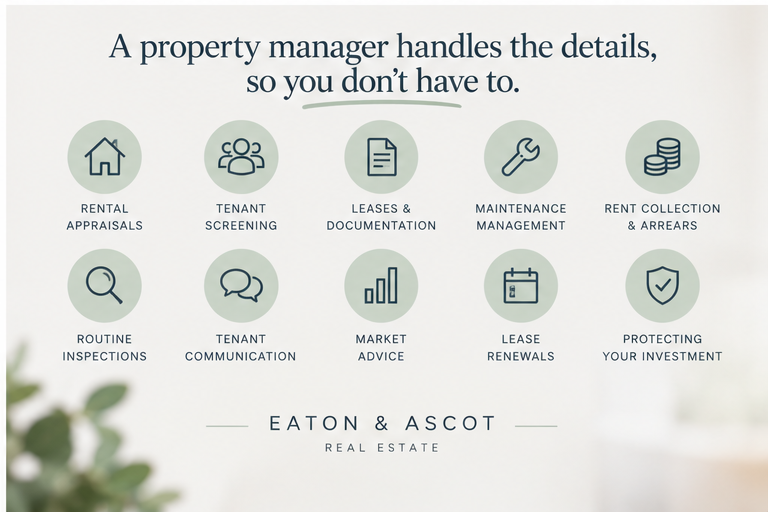
Is a Property Manager Worth It?
For many landlords, the value of a property manager comes down to time, expertise and peace of mind.
Self-managing can mean personally handling advertising, tenant enquiries, inspections, maintenance, documentation, rent monitoring and ongoing communication.
A professional property manager takes care of much of that day-to-day work while keeping the landlord informed.
For owners with busy work schedules, multiple properties or limited experience managing tenants, that support can be especially valuable.
What Should You Look for in a Property Manager?
Not all property management services are the same.
When choosing a property manager, look for someone who offers:
- Strong local knowledge
- Clear communication
- Proactive maintenance management
- Thorough tenant selection
- Regular property inspections
- Transparent fees
- Consistent follow-up
- A personalised approach
Your property manager should feel like someone looking after your investment, not simply processing paperwork.
Looking for Property Management in the Moreton Bay Region?
At Eaton & Ascot Real Estate, we provide personalised property management across Brisbane’s northside and the Moreton Bay Region.
Our approach focuses on clear communication, proactive management and looking after each investment property with care.
Whether you are a first-time landlord, an experienced investor or considering changing property managers, we can help make managing your rental property simpler.
Contact Eaton & Ascot Real Estate to learn more about our property management services in the Moreton Bay Region.