Owning an investment property can be a rewarding way to build long-term wealth, but managing a rental property involves much more than simply collecting rent.
From finding suitable tenants and organising maintenance to keeping up with Queensland tenancy legislation, there are numerous responsibilities that come with being a landlord.
For property owners across Brisbane’s Northside and the Moreton Bay region, managing these responsibilities can become increasingly challenging, particularly when balancing work, family commitments or multiple investments.
This is where a professional property manager can make a difference.
But what does a property manager actually do, and is hiring one worth the cost?
Let’s explore the key responsibilities involved in professional property management and how the right support can benefit your investment.
1. Marketing your rental property
One of the first responsibilities of a property manager is preparing and advertising a property to attract prospective tenants.
Effective rental marketing involves more than uploading a few photographs to a property website.
Depending on the property and management agreement, this may include:
- Assessing the property’s potential rental value
- Recommending improvements to presentation
- Arranging professional photography
- Preparing an engaging rental advertisement
- Advertising across suitable property platforms
- Coordinating property inspections
- Responding to prospective tenant enquiries
A well-presented rental property with appropriate pricing can help generate interest and reduce the risk of unnecessary vacancy periods.
For landlords across Brisbane Northside and Moreton Bay, local market knowledge can be particularly useful when determining an appropriate rental price.
Rental demand and achievable prices can vary between suburbs, property types and individual neighbourhoods.
2. Finding and screening prospective tenants
Choosing suitable tenants is an important part of managing an investment property.
A professional property manager can coordinate the application process and conduct appropriate checks to help landlords make informed decisions.
These may include:
- Reviewing rental applications
- Verifying identification and relevant information
- Assessing an applicant’s capacity to meet rental payments
- Contacting previous rental references
- Reviewing rental history where lawfully permitted
- Communicating application outcomes
Tenant selection must comply with Queensland’s rental application, privacy and anti-discrimination requirements.
While no screening process can guarantee a problem-free tenancy, careful application assessment can help reduce avoidable risks.
3. Preparing tenancy agreements and documentation
Once a tenant has been approved, the next step is preparing the tenancy documentation.
In Queensland, residential tenancies are governed by the Residential Tenancies and Rooming Accommodation Act 2008.
For a typical house or unit rental, a property manager may prepare and coordinate:
- General tenancy agreements
- Entry condition reports
- Rental bond documentation
- Required tenancy information
- Relevant body corporate by-laws
- Key and access arrangements
A thorough entry condition report is particularly important because it documents the property’s condition at the beginning of the tenancy.
This provides a reference point if disagreements arise about damage, cleaning or bond deductions at the end of the agreement.
Property managers can also help ensure documents are completed, issued and retained in accordance with applicable requirements.
4. Collecting rent and managing payments
Rent collection is one of the most visible responsibilities of a property manager, but it involves more than checking whether payments have arrived.
Depending on the management agreement, a property manager may:
- Monitor rental payments
- Follow up on overdue rent
- Maintain payment records
- Issue required notices where appropriate
- Process authorised property expenses
- Provide rental statements to the owner
- Prepare financial summaries for recordkeeping
Clear financial reporting can help landlords understand their property’s income and expenses.
It can also make preparing information for an accountant easier at tax time.
Importantly, rent increases in Queensland are subject to specific legislative requirements.
For most residential properties, rent cannot generally be increased unless at least 12 months have passed since the current rent amount became payable, even if there has been a change of tenant or property manager. Certain exemptions apply.
A knowledgeable property manager can help owners understand the rules before making decisions about rental pricing.
5. Coordinating repairs and maintenance
Every investment property requires ongoing maintenance.
Whether it’s a leaking tap, faulty appliance, damaged fence or urgent plumbing problem, responding appropriately helps maintain the property’s condition and supports a positive tenancy.
A property manager can act as the main point of contact between the landlord, tenant and tradespeople.
Their responsibilities may include:
- Receiving maintenance requests
- Assessing urgency
- Communicating with the property owner
- Organising suitable tradespeople
- Obtaining quotes where required
- Coordinating access
- Following up on completed repairs
- Maintaining repair records
Queensland legislation places responsibilities on property owners and managers to maintain rental premises and ensure minimum housing standards are met.
Emergency repairs must be handled in accordance with the applicable requirements.
Having an organised maintenance process can help prevent small problems from becoming more expensive issues.
6. Conducting routine property inspections
Routine inspections provide an opportunity to assess how a rental property is being maintained and identify potential repair concerns.
During an inspection, a property manager may look for:
- Visible damage or deterioration
- Maintenance issues
- Water leaks or plumbing concerns
- Signs of pests or moisture problems
- The condition of fixtures and fittings
- Issues affecting external areas
- Repairs that may need attention
A useful routine inspection report should provide the landlord with a clear understanding of the property’s condition and any recommended follow-up actions.
In Queensland, routine inspections for general tenancies cannot generally occur more than once every three months unless the tenant agrees in writing.
At least seven days’ notice is required for a routine inspection using the appropriate entry notice.
Inspections must also respect tenants’ privacy and their right to quiet enjoyment of the property.
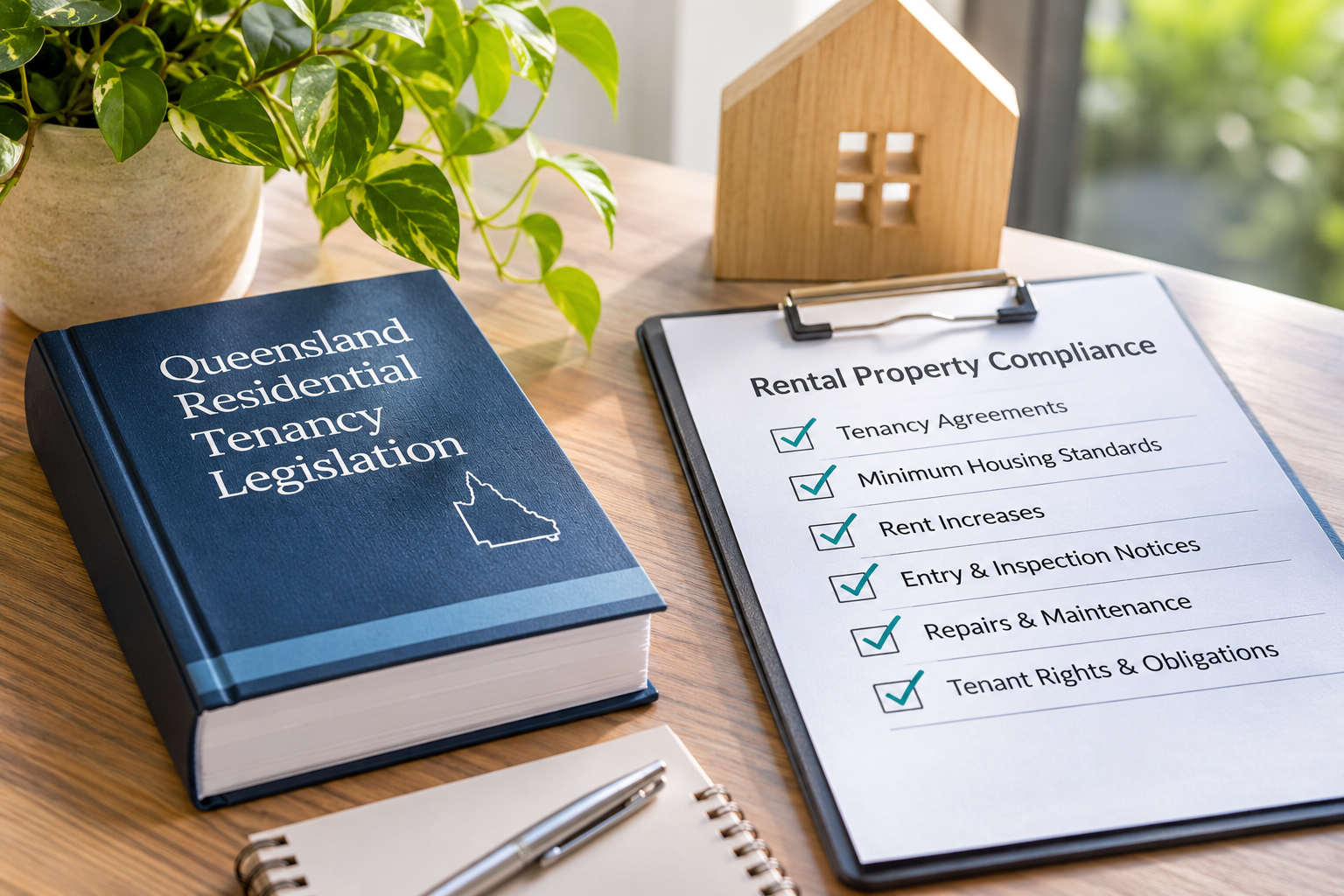
7. Keeping up with Queensland tenancy legislation
Rental legislation changes over time, making it important for landlords to remain informed about their obligations.
Queensland has introduced significant tenancy reforms in recent years, including changes relating to minimum housing standards, rental applications, rent increases and property management practices.
Property managers need to understand the requirements relevant to the properties they manage.
This can include:
- Rental bond procedures
- Entry and exit condition reports
- Minimum housing standards
- Notice periods and entry requirements
- Rent increase restrictions
- Repair and maintenance obligations
- Tenancy termination procedures
- Recordkeeping and privacy obligations
For example, Queensland’s minimum housing standards require rental properties to meet prescribed requirements relating to safety, security and functionality.
These include matters such as weatherproofing, structural condition, working locks, plumbing and drainage, and appropriate privacy coverings.
A professional property manager can help landlords identify compliance matters and coordinate the necessary steps to address them.
However, appointing a property manager does not automatically remove an owner’s legal responsibilities.
8. Managing communication with tenants
Effective communication can make a considerable difference to the experience of both landlords and tenants.
A property manager serves as an intermediary, helping to manage day-to-day communication professionally.
This may involve:
- Responding to tenant enquiries
- Discussing maintenance concerns
- Communicating lease renewal options
- Explaining tenancy procedures
- Addressing concerns before they escalate
- Keeping owners updated about important matters
For landlords who live interstate, overseas or simply prefer a more hands-off approach, having a dedicated point of contact can be particularly valuable.
Good communication can also help maintain positive tenant relationships and support longer-term tenancy stability.
9. Managing lease renewals and vacancies
As a tenancy approaches its end date, there are several decisions to consider.
Should the owner offer a new fixed-term agreement? Is the current rent appropriate? Does the property require maintenance before another tenancy begins?
A property manager can help coordinate these decisions by reviewing relevant factors such as:
- Current rental market conditions
- The existing tenancy
- Applicable rent increase restrictions
- Maintenance requirements
- The owner’s future plans
- Potential vacancy and reletting costs
If a tenant decides to leave, the property manager can also assist with the exit process, condition assessment, bond procedures and preparation for the next tenancy.
The aim is to keep the process organised while complying with the relevant tenancy rules.
10. Providing ongoing advice about your investment
Property management should involve more than handling problems as they arise.
A proactive property manager can also provide useful information to help property owners make longer-term decisions.
This might include advice about:
- Rental market conditions
- Property presentation
- Maintenance planning
- Potential improvements
- Tenant demand
- Rental pricing
- Preparing a property for sale
For homeowners who are unsure whether to retain their property as an investment or sell, understanding both rental and sales market conditions can be especially helpful.
An informed decision should consider your property’s potential rental income, likely expenses, current market value and broader financial circumstances.
Is hiring a property manager worth it?
The value of professional property management depends on your circumstances, experience and the amount of time you’re prepared to dedicate to managing your investment.
Some owners prefer to manage their properties independently.
Others value the convenience of having a professional coordinate tenants, maintenance, inspections, documentation and communication.
Professional management may be particularly helpful if:
- You live away from your investment property
- You own multiple rental properties
- You have limited time to manage tenancy matters
- You’re unfamiliar with Queensland tenancy legislation
- You want assistance coordinating maintenance and tenant communication
- You prefer a more hands-off approach
Property management involves fees, so it’s important to understand what services are included in the agency’s management agreement.
The right choice is one that supports your property’s needs, financial objectives and preferred level of involvement.
How to choose a property manager in Brisbane Northside or Moreton Bay
Choosing the right property manager is an important decision.
When comparing agencies, consider asking:
- What services are included in the management fee?
- How are maintenance requests and emergencies handled?
- How often will I receive property updates and inspection reports?
- What is your approach to tenant selection?
- How do you assess rental pricing?
- Are there additional leasing, advertising or administrative fees?
- Who will be my main point of contact?
- How familiar are you with my suburb and property type?
Clear communication, transparent fees, attention to detail and local knowledge are all important considerations.
Looking for property management in Brisbane Northside or Moreton Bay?
Managing an investment property involves numerous responsibilities, from finding tenants and maintaining the property to navigating tenancy requirements and overseeing financial records.
For many landlords, professional property management provides valuable support in handling these day-to-day tasks.
At Eaton & Ascot Real Estate, we understand the importance of protecting your investment while providing a professional and positive rental experience.
We provide real estate services throughout Brisbane’s Northside and the Moreton Bay region, including North Lakes, Albany Creek, Redcliffe, Caboolture, Burpengary and surrounding suburbs.
Whether you’re preparing to lease your property for the first time, considering changing property managers or simply exploring your options, we’d welcome the opportunity to discuss your needs.
Contact Eaton & Ascot Real Estate to arrange a rental appraisal or discuss your property management requirements.
This article provides general information about Queensland residential property management. Individual responsibilities depend on applicable legislation, the tenancy arrangements and the property management agreement. It does not constitute legal or financial advice.